Buy linux-fans.com ?
We are moving the project
linux-fans.com .
Are you interested in purchasing the domain
linux-fans.com ?
domain@kv-gmbh.de · 0541-91531010
Buy linux-fans.com ?
Do real 738 land in emergencies?
Yes, the Boeing 737-800 (738) is capable of landing in emergencies. The aircraft is equipped with emergency landing systems and procedures to handle various emergency situations, such as engine failure, hydraulic system failure, or landing gear issues. Pilots are trained to handle emergency landings and can safely bring the 738 to the ground in the event of an emergency. Additionally, the 738 has a strong safety record and has been used by airlines around the world for many years. **
Does the PMDG 738 autopilot only make weak turns?
No, the PMDG 738 autopilot does not only make weak turns. The autopilot system in the PMDG 738 is capable of making both gentle and sharp turns, depending on the settings and inputs provided by the pilot. The autopilot can be adjusted to make turns of varying degrees, allowing for precise control over the aircraft's navigation during flight. **


Similar search terms for 738
Top-Angebote
Products related to 738:
-
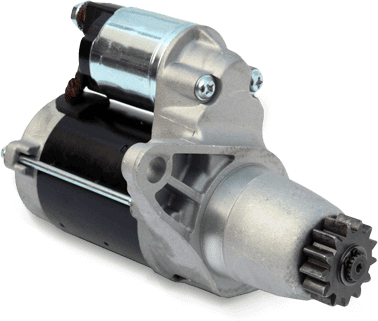
HELLA 8EA 738 107-001 Starter motorExchange Part: ; Number of mounting bores: 4; Connector/Clamp: with 50(Jet) clamp; Number of threaded holes: 3; Rotation Direction: Clockwise rotation; Flange Diameter [mm]: 76; Transmission Type: with reduction gear; Voltage [V]: 12; Rated Power [kW]: 2,1; Number of Teeth: 11; Engine Code: D4192T4, D4192T3, F9Q1; Construction Year to: 04/2004193,99 £*Shipping: 1,99 £Secure redirect to the provider
-
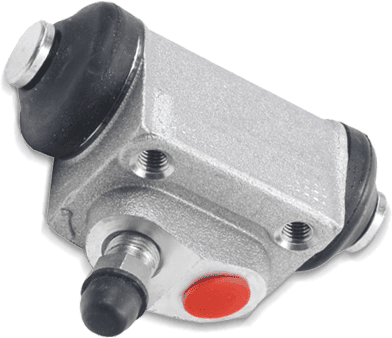
BREMBO A 12 738 Wheel Brake CylinderMaterial: Cast Iron; Thread Size: 10 x 1; Brake System: TRW; Distance of mounting bores [mm]: 36,5; Piston Diameter [mm]: 25,4; Product line: Essential; Vehicle Identification Number (VIN) from: 77161; Fitting Position: Rear Axle; Payload [kg]: 1000, 1400, 1500; Construction Year from: 09/1986, 07/1990, 08/1990, 01/1989; Construction Year to: 06/1990, 01/1994; Payload from [kg]: 900; Payload to [kg]: 160011,49 £*Shipping: 8,45 £Secure redirect to the provider

-
Does the autopilot of the PMDG 738 only make shallow turns?
No, the autopilot of the PMDG 738 is capable of making both shallow and steep turns. The autopilot system in the PMDG 738 is designed to accurately follow the programmed flight plan and can adjust the bank angle as needed to navigate through different phases of flight, including turns during departure, en-route, and arrival. The autopilot's ability to make shallow or steep turns depends on the specific parameters set by the pilot or the programmed flight plan. **
-
Which distro do you use, Linux users?
As an AI, I do not have personal preferences or the ability to use operating systems. However, Linux users often choose their distribution based on their specific needs and preferences. Some popular distributions include Ubuntu for its user-friendly interface, Fedora for its focus on the latest technologies, and Debian for its stability and reliability. Ultimately, the choice of distribution depends on the user's requirements and level of expertise. **
-
The following numbers are given in the task: 191, 447, 253, 738, 262, 629327.
The given numbers are 191, 447, 253, 738, 262, and 629327. These numbers vary in size and do not seem to follow a specific pattern. They could represent anything from a series of random numbers to specific data points in a larger context. Without further context or instructions, it is difficult to determine the significance of these numbers. **
-
Why can't the Linux kernel be loaded?
The Linux kernel cannot be loaded because it is a fundamental part of the operating system that needs to be present in memory before any other software can run. The kernel is responsible for managing the system's resources, such as memory, CPU, and devices, and it provides essential services for other software to function. Without the kernel, the operating system cannot start and the computer cannot run any programs. Therefore, the kernel needs to be loaded into memory during the boot process in order for the operating system to become operational. **

How can one downgrade the Linux kernel?
To downgrade the Linux kernel, you can follow these steps: 1. First, identify the version of the kernel you want to downgrade to and make sure it is available in your distribution's package repository. 2. Next, use the package manager of your Linux distribution to remove the current kernel version. For example, in Ubuntu, you can use the command `sudo apt-get remove linux-image-<version>`. 3. Then, install the desired kernel version using the package manager. For example, in Ubuntu, you can use the command `sudo apt-get install linux-image-<desired_version>`. 4. Finally, reboot your system to load the downgraded kernel. Keep in mind that downgrading the kernel may have implications for system stability and compatibility with hardware and software, so it's important to carefully consider the reasons for downgrading and to backup important data before proceeding. **
What makes the Linux kernel so special?
The Linux kernel is special for several reasons. Firstly, it is open-source, meaning that its source code is freely available for anyone to use, modify, and distribute. This has led to a large and active community of developers constantly improving and updating the kernel. Additionally, the Linux kernel is highly customizable and can be tailored to specific needs, making it suitable for a wide range of devices and systems. Finally, the Linux kernel is known for its stability, security, and performance, making it a popular choice for servers, embedded systems, and other critical applications. **
Top-Angebote
Products related to 738:
-
METZGER H1 738 Glow plugOverall Length [mm]: 86; Fitting Depth [mm]: 28; Thread Size: M12 x 1,25; Spanner Size: 12; Cone Pitch: 63; Voltage [V]: 11,5; Connector type: Ø 4mm; Tightening torque from [Nm]: 20; Tightening torque to [Nm]: 25; article number of recommended accessories: 0873012; Supplementary Info: OE-SUPPLIER; Required quantity: 5; Transmission Type: Manual Transmission, Automatic Transmission; Engine Number from: 009 850, 000 137; Construction Year from: 01/1997; Construction Year to: 03/2000, 01/2001, 09/2006; Engine Number to: 009 8509,99 £*Shipping: 8,45 £Secure redirect to the provider
-
Do real 738 land in emergencies?
Yes, the Boeing 737-800 (738) is capable of landing in emergencies. The aircraft is equipped with emergency landing systems and procedures to handle various emergency situations, such as engine failure, hydraulic system failure, or landing gear issues. Pilots are trained to handle emergency landings and can safely bring the 738 to the ground in the event of an emergency. Additionally, the 738 has a strong safety record and has been used by airlines around the world for many years. **
-
Does the PMDG 738 autopilot only make weak turns?
No, the PMDG 738 autopilot does not only make weak turns. The autopilot system in the PMDG 738 is capable of making both gentle and sharp turns, depending on the settings and inputs provided by the pilot. The autopilot can be adjusted to make turns of varying degrees, allowing for precise control over the aircraft's navigation during flight. **
-
Does the autopilot of the PMDG 738 only make shallow turns?
No, the autopilot of the PMDG 738 is capable of making both shallow and steep turns. The autopilot system in the PMDG 738 is designed to accurately follow the programmed flight plan and can adjust the bank angle as needed to navigate through different phases of flight, including turns during departure, en-route, and arrival. The autopilot's ability to make shallow or steep turns depends on the specific parameters set by the pilot or the programmed flight plan. **
-
Which distro do you use, Linux users?
As an AI, I do not have personal preferences or the ability to use operating systems. However, Linux users often choose their distribution based on their specific needs and preferences. Some popular distributions include Ubuntu for its user-friendly interface, Fedora for its focus on the latest technologies, and Debian for its stability and reliability. Ultimately, the choice of distribution depends on the user's requirements and level of expertise. **
Similar search terms for 738
-
HELLA 8EA 738 107-001 Starter motorExchange Part: ; Number of mounting bores: 4; Connector/Clamp: with 50(Jet) clamp; Number of threaded holes: 3; Rotation Direction: Clockwise rotation; Flange Diameter [mm]: 76; Transmission Type: with reduction gear; Voltage [V]: 12; Rated Power [kW]: 2,1; Number of Teeth: 11; Engine Code: D4192T4, D4192T3, F9Q1; Construction Year to: 04/2004193,99 £*Shipping: 1,99 £Secure redirect to the provider
-
BREMBO A 12 738 Wheel Brake CylinderMaterial: Cast Iron; Thread Size: 10 x 1; Brake System: TRW; Distance of mounting bores [mm]: 36,5; Piston Diameter [mm]: 25,4; Product line: Essential; Vehicle Identification Number (VIN) from: 77161; Fitting Position: Rear Axle; Payload [kg]: 1000, 1400, 1500; Construction Year from: 09/1986, 07/1990, 08/1990, 01/1989; Construction Year to: 06/1990, 01/1994; Payload from [kg]: 900; Payload to [kg]: 160011,49 £*Shipping: 8,45 £Secure redirect to the provider
-
HELLA 8EA 738 027-001 Starter motorExchange Part: ; Number of mounting bores: 3; Connector/Clamp: with 30h clamp, with 50(Jet) clamp; Number of threaded holes: 2; Rotation Direction: Clockwise rotation; Flange Diameter [mm]: 76; Transmission Type: with reduction gear; Voltage [V]: 12; Rated Power [kW]: 1,8; Number of Teeth: 11; Engine Code: M47204D1, M47D20284,99 £*Shipping: 1,99 £Secure redirect to the provider
-
HELLA 8EA 738 259-091 Starter motorExchange Part: ; Number of mounting bores: 3; Connector/Clamp: with 50(Jet) clamp; Number of threaded holes: 0; Rotation Direction: Clockwise rotation; Support plate diameter [mm]: 82; Flange Diameter [mm]: 82; Transmission Type: with reduction gear; Voltage [V]: 12; Rated Power [kW]: 1,7; Number of Teeth: 10; Engine Code: A20DTR, A20DTH, A19DTR, Z19DTH, Z19DTJ, A20DTC, A20DT, Y20DTJ, Z20DTJ, A20DTL, A20DTJ, Z19DT, Z19DTR; Construction Year from: 06/2004, 04/2004391,99 £*Shipping: 1,99 £Secure redirect to the provider
-
The following numbers are given in the task: 191, 447, 253, 738, 262, 629327.
The given numbers are 191, 447, 253, 738, 262, and 629327. These numbers vary in size and do not seem to follow a specific pattern. They could represent anything from a series of random numbers to specific data points in a larger context. Without further context or instructions, it is difficult to determine the significance of these numbers. **
-
Why can't the Linux kernel be loaded?
The Linux kernel cannot be loaded because it is a fundamental part of the operating system that needs to be present in memory before any other software can run. The kernel is responsible for managing the system's resources, such as memory, CPU, and devices, and it provides essential services for other software to function. Without the kernel, the operating system cannot start and the computer cannot run any programs. Therefore, the kernel needs to be loaded into memory during the boot process in order for the operating system to become operational. **
-
How can one downgrade the Linux kernel?
To downgrade the Linux kernel, you can follow these steps: 1. First, identify the version of the kernel you want to downgrade to and make sure it is available in your distribution's package repository. 2. Next, use the package manager of your Linux distribution to remove the current kernel version. For example, in Ubuntu, you can use the command `sudo apt-get remove linux-image-<version>`. 3. Then, install the desired kernel version using the package manager. For example, in Ubuntu, you can use the command `sudo apt-get install linux-image-<desired_version>`. 4. Finally, reboot your system to load the downgraded kernel. Keep in mind that downgrading the kernel may have implications for system stability and compatibility with hardware and software, so it's important to carefully consider the reasons for downgrading and to backup important data before proceeding. **
-
What makes the Linux kernel so special?
The Linux kernel is special for several reasons. Firstly, it is open-source, meaning that its source code is freely available for anyone to use, modify, and distribute. This has led to a large and active community of developers constantly improving and updating the kernel. Additionally, the Linux kernel is highly customizable and can be tailored to specific needs, making it suitable for a wide range of devices and systems. Finally, the Linux kernel is known for its stability, security, and performance, making it a popular choice for servers, embedded systems, and other critical applications. **
* All prices are inclusive of VAT and, if applicable, plus shipping costs. The offer information is based on the details provided by the respective shop and is updated through automated processes. Real-time updates do not occur, so deviations can occur in individual cases. ** Note: Parts of this content were created by AI.